The Warm Blanket Problem: Why the Thing You Love Most Might Be Holding You Back
Why comfort can be the enemy of growth, and how exposure, not avoidance, builds the creative confidence that drives great animation.
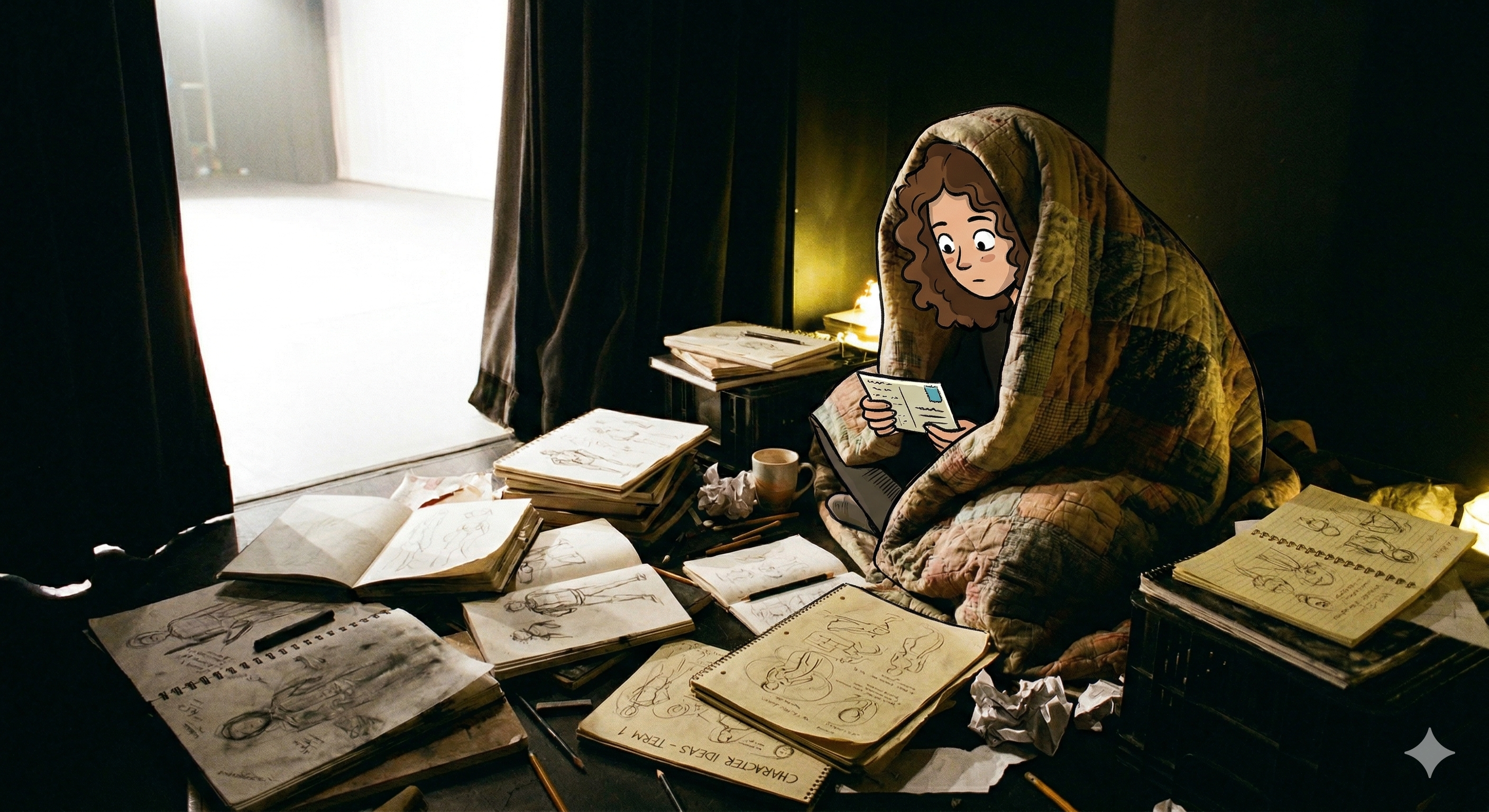
Students love animation. And I mean love it. They consume it, study it, obsess over it. They know release dates before the studio announces them. Animation is their comforting warm blanket, a place where everything feels safe, familiar, and good.
When I was leading an animation program, one of the largest in the country, I saw this pattern everywhere. Students came in passionate, knowledgeable, ready to make the art they loved. But there was a problem, and it showed up in my office again and again: I found myself constantly working with students on two deceptively simple ideas, avoidance and exposure.
The Avoidance Trap
Here’s what I noticed: the very thing students loved was keeping them stuck.
They were afraid to show their work and get critique. Each drawing, every animation, every simulation felt precious. They’d avoid talking about their creative choices, hide behind consumption instead of stepping into creation. The warm blanket had become a hiding place.
I remember one particularly talented student who only drew in a hardbound sketchbook. Each page had one drawing, positioned neatly in the center. And it looked like they’d erased it a hundred times.
“How long did this take?” I asked.
“A few hours.”
It should have taken a few minutes.
This student was trapped in perfectionism, comparing their developing skills to seasoned professionals with decades of practice. When I suggested switching to a newsprint notebook, and made a rule that they couldn’t turn the page until it was completely full, with no erasing allowed, they resisted hard. That sketchbook had been their companion for years.
But they made the switch.
The Slow Build to Exposure
It took half a year of steady, biweekly check-ins before the process felt safe enough to flow.
That’s important because exposure doesn’t happen overnight. It mirrors how the industry actually works, sustained effort, repeated attempts, gradual tolerance for discomfort. The breakthrough didn’t come in one dramatic moment. It came in dozens of small choices: another page filled, another mistake accepted, another day moving forward.
Eventually, something shifted. The work started flowing into their other classes. They began pushing themselves. Then came the real transformation, they started asking to go first in critique sessions. Soon they were helping other students face their own avoidance.
Looking back, they told me they wished they’d embraced it sooner. Hindsight has a way of making fear look small.
Today, that student’s a successful animator, bouncing between productions. They just wrapped on the latest Avatar film.
Why This Matters Beyond One Student
That simple experiment worked so well that we adapted it across other classes. Faculty built their own exposure challenges. Because every generation learns differently, and in college, a “generation” lasts about five years, we had to keep evolving.
The students I taught, Millennials transitioning into Gen Z, shut down differently. When pushed, they’d say things like, “My mom says it’s good,” or “You know what I mean.” What they really meant was: I’m scared. I don’t want to be vulnerable. I want to stay safe.
Today’s students need more nurturing and a different kind of support. Not coddling. Support. There’s a difference. Their phones never stop. Their feed never pauses. They grew up comparing themselves to professionals before they ever picked up a stylus. And that leads to the next challenge.
The Social Media Problem
Here’s the thing, social media was supposed to open the door. And in some ways it did. But what it mostly shows students is a highlight reel, polished work, perfect portfolios, finished films. Nobody posts the 200 versions of a shot that didn’t work.
So students scroll and compare their in-progress, uncertain, messy real work against someone else’s final product. And they wonder why they feel behind.
What students actually need is access to the process, not just the result. Working professionals who’ll show their abandoned scenes and their rough pass and say “yeah, this was terrible before it was good.” Disney and Pixar have the behind-the-scenes footage. It exists. But it rarely gets shared the way the finished frame does.
Failure is baked into success. Every great piece of animation you’ve ever loved was ugly at some point. That’s not the exception. That’s the job.
Why the Industry Demands Exposure
The animation industry runs on a simple principle: fail fast, fail early.
It’s not cruelty. It’s efficiency.
Working in isolation means no feedback, no iteration, no growth. You lose time chasing dead ends. And time is the most expensive part of production. If you don’t show work early and often, you’re not just slowing yourself down, you’re potentially driving costs up for the entire team.
Studios don’t reward precious, protected work. They reward collaboration, iteration, and the courage to put imperfect ideas on the table so they can evolve into something great.
Your Version of the Notebook
If you see yourself in this story, hiding behind the perfection, polishing work in private, terrified to share, I get it. It’s scary. But find your version of the newsprint notebook. Something that makes avoidance harder and exposure a little easier. Share before you think it’s ready. Ask to go first. Let the feedback in even when it stings, because that feedback is the only thing that actually moves you forward.
It won’t happen overnight. It might take six months of steady check-ins with yourself, a mentor, a trusted friend. That’s OK. That’s how it works.
The work you love, the animation that wraps around you like a warm blanket, wasn’t born from comfort. It was made by people who stepped out into the cold, showed imperfect work, failed early, and came back anyway.
That’s still the only way it gets made.